
Today's Market News:
When Fixed Rates Rise, Buyers Go Flexible
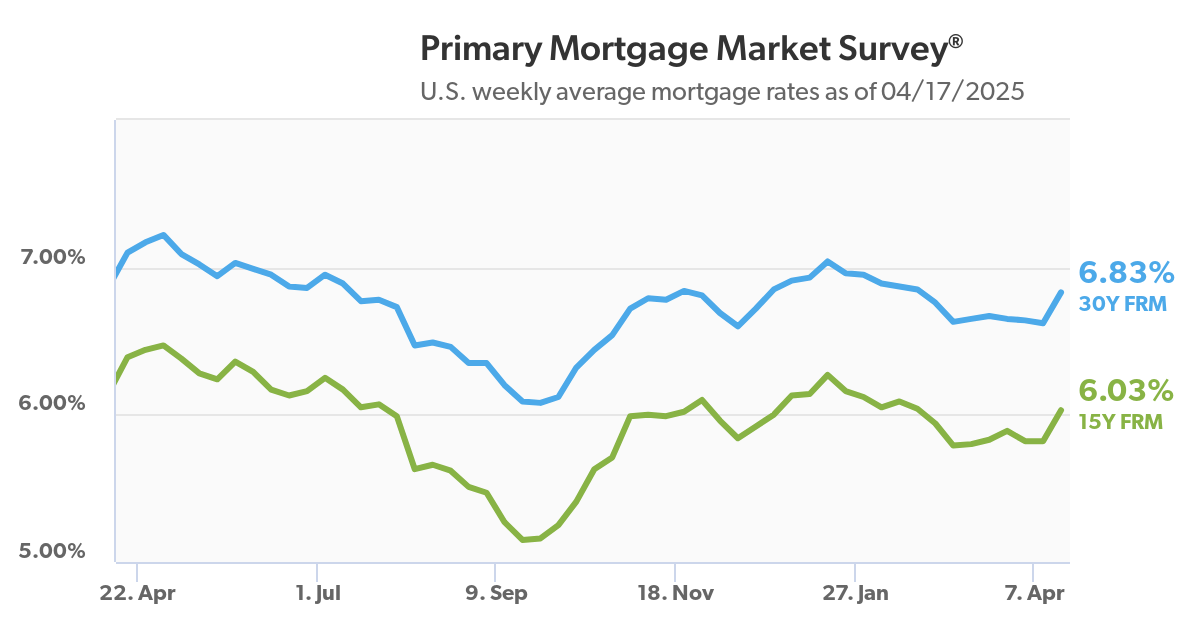
Last week's economic headlines featured rising interest rates, which deterred some, but not all home buyers. Applications for new purchase mortgages decreased 1.5% for the week ending September 18th, according to the Mortgage Bankers Association's seasonally adjusted index.
While some agents are seeing some buyers retreat, others are opting for mortgage programs that are rarely seen when rates are low. These include adjustable-rate mortgages (ARMs).
The share of ARM applications for the week ending September 11th was 8.4%, rising to 9.8% for the week ending September 18th.
Mike Fratantoni, MBA senior vice president and chief economist, commented: "With fixed rates much higher, more borrowers opted for ARMs, with the ARM share reaching 9.8%, as rates for 5/1 ARMs were more than a percentage point lower than those for fixed-rate loans."
I can assist your buyers with a selection of mortgage financing options. Feel free to pass my contact details to them or contact me for updates.1
Sixteen Metros to Watch in October

While some metropolitan areas expected a bump in sales this month, others are expected to see more opportunities for buyers in a couple of weeks.
According to a joint analysis between Redfin and data visualization studio Home Economics, October will be the best time for homebuyers to score a deal in 16 major metro areas, including many places in the Midwest and on the East Coast.
Early October may be a good time for buyers to score a deal in Boston, Chicago, Minneapolis, New Brunswick, and Orlando, while those in Philadelphia and Virginia Beach may want to wait a week or two. Cleveland and Phoenix house hunters may want to wait until late October.
Refer your buyers to me for a fast, complimentary loan pre-qualification so they'll know what they can afford. Buyers who are ready to make an offer can apply for a loan pre-approval, which helps increase your negotiating power.2
Handling Client Questions About the Recent Fed Rate Hike

Even though consumers have been hoping for interest rates to fall, the Federal Reserve recently announced an increase in its benchmark rate to help combat inflation.
This means you may be fielding questions from anxious buyers, sellers and prospects, especially those whose financing hasn't closed. These are potentially difficult to manage, since you don't have a crystal ball around to help you. (If you do have a crystal ball, call me — I'd love to borrow it!)
While increasing interest rates are challenging, it's also an opportunity to educate your borrowers on what they can focus on in the current market, so they'll worry less. One broker described her approach:
"A healthy market looks like an EKG. I hate to say that, but I always use that as my analogy. It goes up, and it comes down. That's how history has always been, and rates will move up, and rates will come down. It's just something that we have to be fluid and move with."
Ultimately, a volatile market can be an opportunity to build trust, especially when you take the time to share your insights. Encourage clients to have a long-term plan. It's also an ideal time to refer clients to me, as I'll keep them up to date with market shifts when they decide to make a move.3
Costco Can Be a Good Neighbor to Some Buyers

You're well aware of neighborhood features that attract more would-be home buyers. These include top-rated schools, popular recreational areas, and close proximity to rail services and fast-moving commuter routes. But what about popular shopping destinations?
One big-box retailer, Costco, is being described as a destination that could increase a home's value if it's nearby. While one can understand the lure of a $1.50 hot dog and soda, Costco's appeal doesn't always add value to a property, according to economic research.
Research carried out by Vancouver School of Economics student Silas Kwok found that, when Costco opened in new areas from 2002 to 2020, the openings "caused no significant changes in property values on average." However, there were a few exceptions, and these were limited to two types of neighborhoods.
Costco openings resulted in a 7.9% increase in value in properties within five miles, as long as they were in counties with an above-average population density. Properties in counties within five miles that were home to households with above-average incomes saw a 5.2% increase in values. These increases showed up around 2.5 years after each Costco opening.
Reasons for these exceptions: research shows that wealthier Americans prefer Costco, and that the retailer is perceived as bringing more value to people's lives than other big-box stores.4
Home Price Gains: Winners and Losers

The strong buyer's market in many areas continues to be a factor. On a national level, there were 58% more home sellers than buyers last month. Some regions, such as the Sun Belt, saw 100% more sellers than buyers.
While demand is sluggish due to rising costs, economic uncertainty, and more homes for sale, prices continue to rise. This is partly because many homeowners have substantial equity and little incentive to accept a steep discount if they put their home on the market.
The hot luxury segment, driven in part by affluent buyers in Florida and San Francisco's AI-fueled housing market, is another factor keeping prices afloat.
Metro areas with the biggest month-over-month home price increases were led by St. Louis, MO, where home prices rose 1.1%. Pittsburgh, PA prices rose by 1%, and San Antonio, TX, San Jose, CA, and Baltimore, MD all saw 0.9% price gains.
The biggest month-over-month price declines were in Austin, TX (-0.7%), Charlotte, NC (-0.7%), Milwaukee, WI (-0.6%), Warren, MI (-0.6%) and Fort Lauderdale, FL (-0.5%).5
Sources: 1cnbc.com, 2redfin.com, 3mpamag.com, 4theclose.com, 5redfin.com.
Recent Comments