

Today's Market News:
Rates Return to Mid-2025 Levels
After another failed ceasefire in the Iran war, oil prices increased, pushing bond yields and mortgage rates higher.
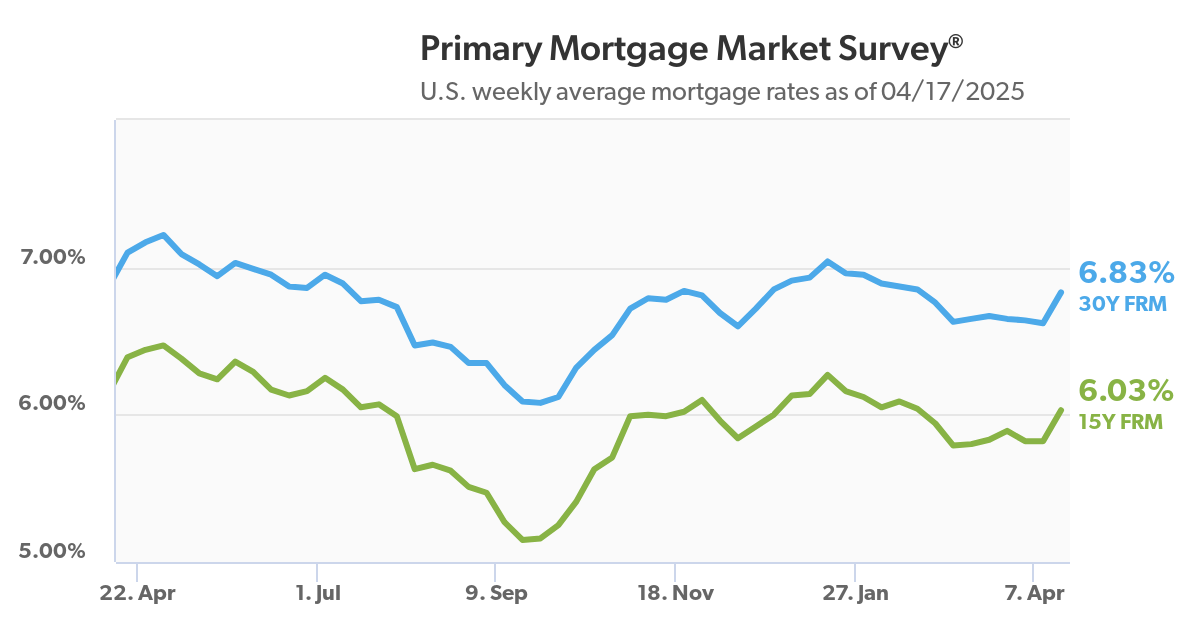
According to Mortgage News Daily, the average rate for a 30-year fixed-rate loan increased by 6 basis points to 6.87% on Monday, August 31st. It's the highest level since June 2025.
Earlier this year, economists were predicting that interest rates would fall. Before the conflict began in late February, the rates for 30-year, fixed-rate loans hovered as low as 5.98% according to Freddie Mac.
Here's an example of how rates are affecting home buyers. Currently, a buyer of a $450,000 home would have monthly principal and interest payments of around $2,363 if they closed on a 30-year fixed-rate mortgage with a 20% down payment. This is around $207 a month more than if the buyer had closed at the end of February.1
More Buyers Seeking Better Air Quality

During the 19th century, some Americans moved to certain states because of their air quality. For example, Arizona's hot, dry climate became a popular "cure" for asthma, with special schools for asthmatic children.
Today, Americans are moving away from metro areas with a higher risk of poor air quality. Last year, 277,740 more people moved out of high-risk U.S. counties than into them. However, affordability is also a factor, as almost every part of the country faces at least some risk of poor air quality.
The at-risk places losing the most residents were expensive coastal markets like Los Angeles, New York City and Orange County. Some, but not all moves were the result of recurring wildfires.
Indoor air quality matters, too. Thirty-six percent of prospective home buyers are telling agents that a clean home with high-end filtration systems for air and water is a "must have". Healthy, clean air is more valued by this year's buyers than other popular amenities like smart home features and pools.2
Make Giving Back Part of Your Business Plan

Selling and buying homes can be more fulfilling when you're actively involved in the community. You may put your hand up when an opportunity shows up, but if giving back isn't something you do on a regular basis, it's time to consider the advantages.
Volunteering is an ideal way to meet others, especially if you're new to the community, and it can help you network with local businesses.
Causes that many people get behind:
- Community food banks
- School sports teams
- Assistance for veterans and active military
- Rescued and homeless animals
- Housing or home repair for low-income residents
Builders Continue to Expand Multi-Family Construction

While construction of new single-family homes is decreasing in some areas, multi-family homes are taking off. According to the latest Home Building Geography Index (HBGI), single-family construction declined in nearly all geographic categories* during the second quarter of 2026, while multi-family construction expanded in six out of seven categories.
Multi-family construction activity was concentrated in Large Metro Core and Suburban counties with populations over 1 million, with Large Metro Core counties increasing builds by 11.6%. Large Metro Suburban counties also followed a similar pattern, posting a 7.9% increase. Non-Metro/Micro counties posted the clearest acceleration, with growth rising to 10.3%, although these areas accounted for only 1.2% of multi-family construction.
Single-family construction declined in all but one geographic category in the second quarter. Large Metro Core counties recorded the steepest decline, falling 13.9%; however, this was an improvement from the 15.8% decline in the previous quarter. Outlying counties in Small Metro areas were the only market to return to growth, increasing a modest 0.9% following four consecutive quarterly declines.
* The HBGI's seven geographic regions are defined as counties. The largest are Large Metro Core and Large Metro Suburban counties; both have populations over 1 million. These are followed by Large Metro Outlying, Small Metro Core, Small Metro Outlying, Micro (towns with 10,000 to 50,000 residents) and Non-Metro/Micro counties.4
How to Explain Why The 2008 Crash Won't Reappear

If you're being questioned about a housing market crash, here are some facts to share.
Today's market is different. While the 2008 housing crash saw foreclosures and "underwater" borrowers, today's market is facing a lack of affordable homes in many areas.
Lending rules have changed. Stricter appraisal and lending practices, including Qualified Mortgages and Appraiser Independence Requirements (AIR), were introduced after the 2008 crash. These help reduce the possibility of inflated home values and high-risk loans.
This is a correction, not a collapse. The 2026 market is better described as an uneven, long-term correction in the wake of the pandemic era's soaring prices, with more sellers cutting prices this year.
If you have your own questions about today's economic climate, let's arrange a chat soon.5
Sources: 1cnbc.com, 2redfin.com, 3nar.realtor, 4eyeonhousing.org, 5thestreet.com.
Recent Comments