


Hello {{ recipient.f_name }},
Today's Market News:
The Fed Cut Rates...So Why Did Mortgage Rates Go Up?
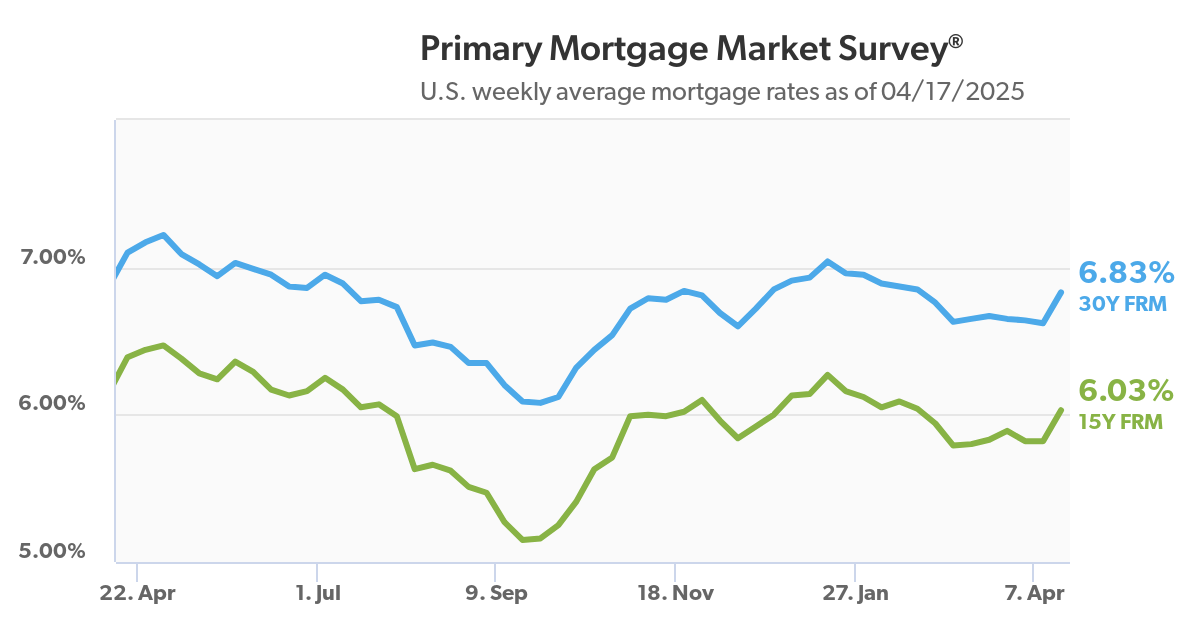
In late October, the Federal Reserve announced another rate cut which was the second of 2025. However, mortgage rates didn't go down...they went up. This confused more than a few consumers and was a setback for those considering buying a home soon.
The average rate on 30-year mortgages jumped 20 basis points after Chairman Jerome Powell announced the cut and followed it with a news conference. One reason for this: during the conference, Powell stated that another interest rate cut in December was "far from" certain, even though the third cut was expected and anticipated by the bond market.
After hearing this statement, the bond market reacted by sending the 10-year Treasury yield, which is a key indicator for mortgage rates, back above 4%.
Matthew Graham, chief operating officer at Mortgage News Daily, commented: "The market was nearly 100% certain of another cut in December. The Fed was not as certain, and Powell made it a point to say so yesterday."1
Luxury Home Prices Pull Ahead

While overall home price increases are slowing down, luxury homes are pulling ahead. The typical U.S. luxury home sold for $1.26 million in September 2025, up 4.8% from a year earlier and a record high for the month. That's more than twice the pace of price growth for non-luxury homes, which rose 1.8% year over year to a median of $371,583.
This trend has been going on for two years, with luxury home prices rising faster than non-luxury properties. Since September 2023, luxury home prices have risen by around 11%, which adds up to almost twice the 6% growth rate for other homes.
Cities cashing in on the highest luxury home price increases include:
- West Palm Beach, FL (+14.8% to $4.13 million)
- Newark, NJ (+12.3% to $2.05 million)
- Virginia Beach, VA (+11.2% to $1.07 million)
- San Francisco, CA (+30.5%)
- Providence, RI (+19.1%)
- Fort Worth, TX (+13.5%)
- San Jose, CA (14 days)
- St. Louis, MO (16 days)
- Detroit, MI (16 days)22
TikTok Introduces Smart Split Editing Tool

TikTok recently announced several new tools for creators, including an AI-powered tool, Smart Split. It helps users convert longer videos into shorter clips, using automated detection to find natural breaks and segments within a video. Next, it automatically clips, reframes, captions and transcribes your longer content into several short clips.
Once Smart Split creates the clips, creators can select one or more of the shorter videos to upload to their TikTok account.
If you're wondering what Smart Split could do for you as an agent, you can test drive it by uploading a longer video of a listing walk-through, or a video you took during a community event. This tool is designed to help cut down on users' editing time, so they can spend more time researching and creating new post topics and ideas.3
It's Been a Historically Slow Year

While agents are well-aware of the factors sidelining buyers and sellers this year—stubbornly high interest rates, sticky inflation, climbing property prices and a weakening labor market—this year's sales data may still come as a surprise. During the first nine months of 2025, only 28 out of every 1,000 homes changed hands. This is the lowest selling rate since the 1990s.
There were 37.7% fewer homes sold this year than during the middle of the pandemic buying frenzy in 2021 (44 of every 1,000) and 31.2% fewer homes sold than during the last pre-pandemic year in 2019 (40 of every 1,000).
Not all cities saw homeowners staying put. Sellers were active in Virginia Beach, Virginia and West Palm Beach, Florida, with sales at 35.2 and 32.6 per 1,000 homes respectively. Tampa, Florida, Indianapolis, Indiana, and Atlanta, Georgia also beat the odds.
On the other side of the turnover coin, New York, New York and Los Angeles, California saw the fewest sales.4
It's Not Too Late to Benefit from the November Fall-Back

For example, you can set your alarm an hour earlier and begin your day with an extra hour. Or, if you want a bigger change, set your alarm for 1 1/2 hours earlier. If you do this soon, it will only feel about 30 minutes earlier than your usual morning routine.
If you begin the day with an outdoor walk or run, you may want a wearable light if the streets don't provide enough for you to see the pavement. Chances are, you'll see others wearing these, so you'll know what to shop for.
Going to the gym earlier than usual means that you'll probably see a different group of regulars, so if you want to work out with the same people and/or instructors, you may want to use that extra hour for something else.
No matter what strategy you choose, you'll still enjoy a less-rushed morning, with more time to prepare for the day.5
Sources: 1cnbc.com, 2redfin.com, 3socialmediatoday.com, 4redfin.com, 5lifehacker.com
Recent Comments