

Today's Market News:
Interest Rates Jump in Response to Iran Conflict
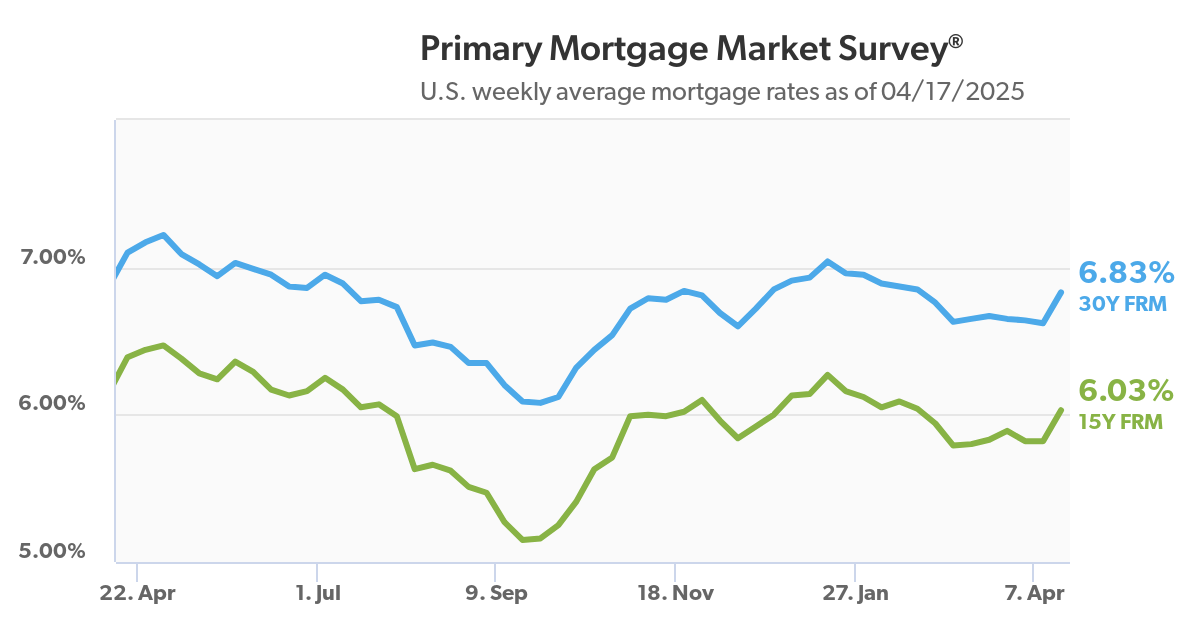
After falling below 6%, mortgage rates reversed course and hit their highest point in two weeks. These rates tend to follow the yield on the U.S. 10-year Treasury, which climbed back above 4% following news of the conflict in Iran.
Earlier this week, the average rate on the popular 30-year fixed loan rose 13 basis points to 6.12%, according to Mortgage News Daily. It fell to a recent low of 5.99% on Feb. 23rd.
The February rate drop was welcome news as the all-important spring housing market gets underway. When rates crossed into the 5% range, agents and sellers hoped that this would encourage buyers to make their move.
While some fear rising oil prices may have a negative effect on mortgage interest rates, others are considering other drivers. Mortgage News Daily's Matthew Graham explained that Treasury bond yields were dragged down by month-end transactions.
"The crux of the bond sell-off played out in a vacuum — STRONGLY suggesting Friday's yields were dragged down by month-end buying and this morning's selling is 'new month' positioning."
Other factors that may affect mortgage interest rates include new economic data released during this month, including the employment report.1
California Homeowners Keep Dreamin' for Longer

Over the past decades, homeowners have been staying put for longer than before. Homeowner tenure peaked at 13.4 years in 2020, roughly doubling the average tenure from 2005. These numbers declined marginally for four years before ticking up in 2025.
Currently, the typical U.S. homeowner stays put in their house for 12 years, the longest median occupation since 2022.
Homeowner tenure is longest in California, largely because state laws such as Proposition 13, which locks owners into low property taxes, encourage them to stay. In Los Angeles, the typical homeowner hangs onto their house for 20 years, followed by San Jose, where it's nearly 19 years. Homeowners leave their hearts in San Francisco for 16.5 years, while those in San Diego stay for an average of 14.5 years.
In contrast, homeowners in more affordable metro areas don't wait nearly as long before pulling up stakes. For example, a typical owner in Louisville, KY, spends 8.3 years in a house before selling. Other mobile movers live in Las Vegas (8.8 years), Charlotte, NC (9.2 years), Orlando, FL (9.2 years), and Raleigh, NC (9.3 years).
Tenure is shorter in many of these cities because of their relative affordability, and because they're popular vacation destinations. Residents may move to one of these cities for employment opportunities, which may turn out to be short-term. Investors are also selling properties in Las Vegas and Orlando, creating more turnover and availability.2
Instagram Opens Up Content Scheduling to All Users

Instagram has made a selection of its creator tools available to all public accounts in the app, providing more users with assistance with managing their Instagram presence. Previously, creator tools were only available to those who had made the change to Professional Mode in the app, setting up a Creator or Business account.
Now, several of the most popular Creator elements are available to all users. If you haven't yet made the change to Professional Mode, you can check out some of these elements and decide if they're for you. For example, you may be interested in the Insights dashboard as it tells you how your content is performing. You'll also have access to audio tools and content scheduling.
Using these elements could make it easier for you to grow your Instagram followers, even if you're new to the app. Currently, if and when Instagram users reach 1,000 followers, other creative and management options may become available.3
NAHB Releases New Home Affordability Analysis

Recently, the National Association of Home Builders (NAHB) released its own take on housing affordability. The 2026 Priced-Out Analysis zoomed in on the current buying challenges by creating a pyramid of home price brackets and the household incomes required to buy at each level.
The pyramid compares incomes to the number of households that can afford to buy a home in 2026. For example, the pyramid illustrates that 52% of households (70 million) cannot afford a $300,000 home, while the estimated median price of a new home is around $410,000.
The largest share of households falls within the first step, where homes are priced under $200,000. As home prices increase, fewer households can afford the next price level.
Even if 2026 looks bleak for buyers with lower incomes, there are a variety of programs, such as down payment assistance and grants, that may be available. Refer your prospective buyers to me and I'll introduce them to any available options.4
Create Facebook Ads That Align With Your Goals

- Facebook ads offer a variety of objectives. You can choose from ads that heighten awareness of you and your brand, help generate more leads, or encourage more engagement.
- You have two options for campaign budgeting. Buy with auction offers, which enable you to place ads within the Meta Audience Network, or choose the reservation buying type. Reservation enables you to plan and buy your campaigns in advance, with predictable performance goals and more control over your frequency controls.
- You define your own performance goals. For example, if you've chosen awareness as your goal, you can have everything from 'Maximize reach' to the specific 'Maximize two-second continuous video views.'
- You'll customize your target audience. You have several options, including simply defining their ages and neighborhoods, or using the Meta Advantage+ audience feature to handle targeting for you.
Sources: 1cnbc.com, 2redfin.com, 3socialmediatoday.com, 4eyeonhousing.org, 5buffer.com
Recent Comments